


1. The Client
The client is a dynamic US-based mobile application designed to streamline the hiring process. They solve a critical pain point in the American job market: speed. With a significant percentage of companies facing delays due to lengthy background checks, this platform offers a portable solution that accelerates candidate verification. Their business model relies entirely on speed, efficiency, and high availability.
2. The Challenge: “Paying for Lights in an Empty Room”
While the app was efficient for users, their backend infrastructure showed scope of improvement and efficiency. As the user base grew across the US, so did the AWS (Amazon Web Services) bill—reaching a point where infrastructure costs were eating into operational margins.
We identified a classic case of “Cloud Sprawl.”
- Idle Machinery: Development (Dev) and Production (Prod) environments were running on similar, high-capacity instances. The Dev environment, used only during business hours by engineers, was running 24/7—like leaving the lights on in an empty office building all night.
- Database Waste: The Relational Database Service (RDS) was over-provisioned. The instance types selected were far more powerful (and expensive) than the actual traffic volume required.
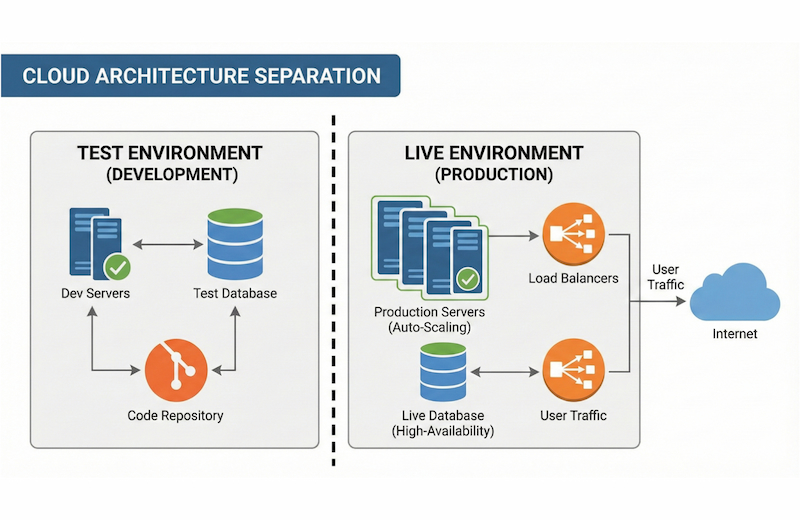
- Mixed Environments: Dev and Prod resources were entangled in the same Virtual Private Cloud (VPC), creating security risks and making cost tracking difficult.
3. The Solution: Re-Architecting with Intelligence
Our team at Octoyoung didn’t just want to cut costs; we wanted to build a lean, scalable foundation for their future growth. We leveraged Amazon Q—AWS’s generative AI assistant—to analyze usage patterns and suggest optimal configurations.
Step 1: The Separation
We created distinct VPCs for Production and Development. This hygiene step immediately clarified where the money was going and improved security posture.
Step 2: Right-Sizing the Fleet
Using Amazon Q’s rightsizing recommendations, we:
- Downgraded the RDS instances to a tier that matched their actual I/O requirements, maintaining performance while slashing costs.
- Switched the EC2 instances (virtual servers) to Reserved Instances (RIs). By committing to a consistent usage baseline for a 1-year term, we secured a significantly lower hourly rate compared to On-Demand pricing.
Step 3: Turning Off the Lights
We implemented an automated scheduler for the Development environment. Now, non-production servers automatically shut down at 8 PM and wake up at 8 AM. This simple “Instance Scheduler” effectively cut the running cost of the Dev environment by ~50%.
4. The Results
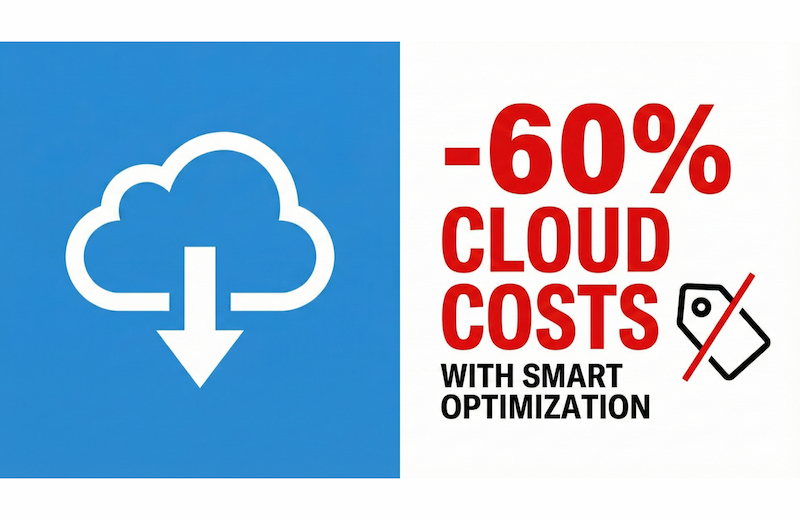
The impact was immediate and substantial. Within the first billing cycle post-optimization, the client saw:
- 60% Reduction in Monthly Cloud Bill: From a bloated expense to a lean operational cost.
- Faster Optimization Cycles: With Amazon Q integration, future anomalies can be detected and rectified in real-time.
- Scalable Foundation: The new architecture allows them to scale up instantly during peak recruitment seasons without carrying dead weight during downtimes.
Conclusion:
For high-growth startups, cloud costs can silently erode runway. By combining architectural discipline with AI-driven insights, Octoyoung turned this client’s infrastructure from a financial leak into a streamlined, high-performance engine.